Programme Overview
The Business Administration undergraduate Programme aims to equip graduates with adequate knowledge, professional skills, political qualities, ethics, professional demeanor, and good health. This enables them to work effectively in various fields related to production and business operations within enterprises.
Programme Learning Outcomes
The Programme Learning Outcomes (PLOs), competency levels, and performance indicators (PIs) for the Programme in Business Administration are presented as follows:
| Programme Learning Outcomes (PLOs) | Competency Level* | Performance Indicators (PIs) |
|---|---|---|
| PLO1: Apply knowledge of natural sciences, social sciences, economics, and management to business administration activities. | C4/P3 | PI1.1. Identify problems that need to be addressed in business administration. PI1.2. Develop solutions to problems in the field of business administration. PI1.3. Apply selected solutions to solve business administration problems in specific contexts. |
| PLO2: Make decisions in business administration in specific professional situations. | C6/P3 | PI2.1. Analyze data to support managerial decision-making. PI2.2. Identify and analyze the impact of environmental factors on managerial decisions. PI2.3. Make decisions appropriate to specific professional situations. |
| PLO3: Develop critical, creative, and systematic thinking to perform business management activities in specific contexts. | P3/A3 | PI3.1. Identify relevant information and data to support decision-making in business administration. PI3.2. Identify business administration problems from a multidimensional perspective. PI3.3. Propose new ideas and approaches in business administration. |
| PLO4: Demonstrate entrepreneurial spirit and develop sustainable business ideas. | C4/P3 | PI4.1. Generate start-up ideas and recognize business opportunities. PI4.2. Develop innovative and sustainable business ideas. PI4.3. Plan and implement feasible entrepreneurial activities. |
| PLO5: Communicate effectively and use technology appropriately in managerial activities. | C4/P3 | PI5.1. Use language and communication styles appropriate to the context and audience. PI5.2. Present issues clearly and persuasively. PI5.3. Use technology flexibly and effectively in digital communication. |
| PLO6: Work effectively in a multicultural environment, adapt to change, and integrate successfully. | C4/P3 | PI6.1. Collaborate and work effectively in multicultural teams. PI6.2. Adapt to change and integration requirements. PI6.3. Use technology flexibly and effectively in teamwork. |
| PLO7: Demonstrate responsibility toward the profession, the community, and society. | C3/A3 | PI7.1. Demonstrate ethical awareness and professional responsibility. PI7.2. Recognize and contribute to community and social issues. PI7.3. Adapt to technological advancements while upholding ethical responsibility in the digital environment. |
Curriculum Structure
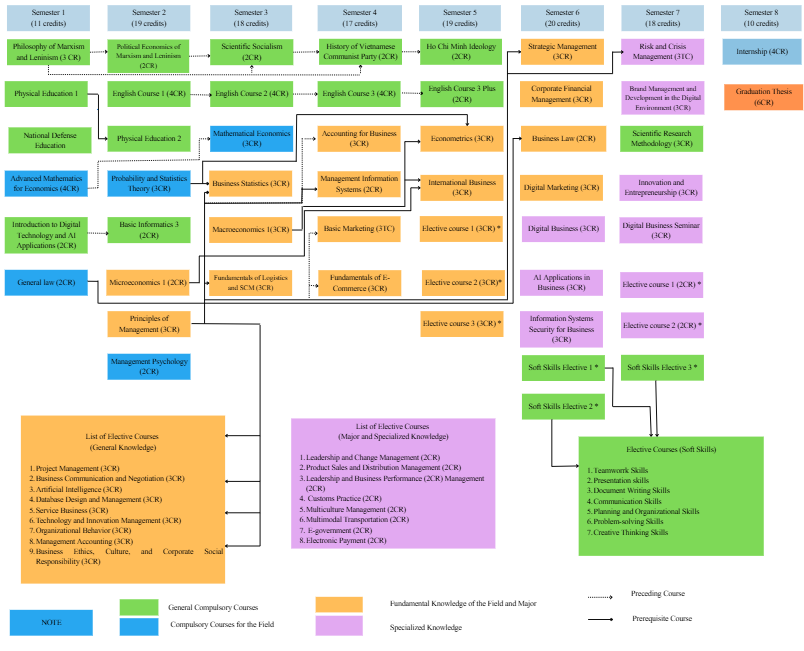
Course Matrix
| No. | Code | Course Name | Semester | Credit | LEARNING OUTCOMES | ||||||
| PLO1 | PLO2 | PLO3 | PLO4 | PLO5 | PLO6 | PLO7 | |||||
| 1 | BAS1150 | Marxist-Leninist Philosophy | 1 | 3 | I(Y) | I(Y) | I(Y) | ||||
| 2 | INT11205 | Introduction to Digital Technology and AI Applications | 1 | I(X) | I(Y) | I(Y) | |||||
| 5 | BAS1267 | Advanced Mathematics for Economics | 1 | 4 | I(X) | I(Y) | I(X) | ||||
| 6 | BSA12117 | Law and Intellectual Property | 1 | 2 | I(Y/A) | I(Y/A) | I(X/A) | ||||
| 7 | BAS1151 | Marxist-Leninist Political Economy | 2 | 2 | I(Y) | I(Y) | I(X) | ||||
| 8 | BAS1157 | English (Course 1) (*) | 2 | 4 | I(Y) | I(Y) | |||||
| 10 | BAS1210 | Probability and Statistics Theory | 2 | 3 | I(X) | I(Y) | I(Y) | ||||
| 11 | BSA1328 | Principles of Management | 2 | 3 | R(X/A) | R(Y/A) | I(X/A) | I(Y/A) | |||
| 12 | INT1156 | Basic Informatics 3 | 2 | 2 | I(Y) | I(X) | I(X) | ||||
| 13 | BSA1310 | Microeconomics 1 | 2 | 3 | R(X/A) | R(Y/A) | I(X/A) | I(Y/A) | |||
| 14 | BSA1236 | Management Psychology | 2 | 2 | I(Y/A) | I(X/A) | I(Y/A) | ||||
| 15 | BAS1152 | Scientific Socialism | 3 | 2 | I(Y) | I(Y) | |||||
| 16 | BAS1158 | English (Course 2) | 3 | 4 | I(Y) | I(Y) | |||||
| 17 | BSA1241 | Mathematical Economics | 3 | 3 | I(Y/A) | I(X/A) | I(X/A) | I(Y/A) | |||
| 18 | BSA1393 | Fundamentals of Logistics and Supply Chain Management | 3 | 3 | I(Y/A) | I(X/A) | I(X/A) | I(Y/A) | |||
| 19 | BSA1338 | Business Statistics | 3 | 3 | I(X/A) | I(X/A) | I(Y/A) | ||||
| 20 | BSA1311 | Macroeconomics 1 | 3 | 3 | R(X/A) | R(Y/A) | R(Y/A) | ||||
| 21 | BAS1153 | History of Vietnamese Communist Party | 4 | 2 | I(Y) | ||||||
| 22 | BAS1159 | English (Course 3) | 4 | 4 | I(Y) | I(Y) | |||||
| 23 | FIA1389 | Accounting for Business | 4 | 3 | R(Y/A) | I(Y/A) | R(X/A) | ||||
| 24 | MAR1322 | Basic Marketing | 4 | 3 | R(Y/A) | R(X/A) | R(Y/A) | ||||
| 25 | BSA1365 | Fundamentals of E-Commerce | 4 | 3 | R(Y/A) | R(Y/A) | R(X/A) | R(X/A) | |||
| 26 | BSA1307 | Management Information Systems | 4 | 2 | R(Y/A) | R(X/A) | R(Y/A) | ||||
| 27 | BAS1122 | Ho Chi Minh Ideology | 5 | 2 | I(Y) | I(Y) | I(Y) | ||||
| 28 | BSA1387 | International Business | 5 | BSA1387 | R(X/A) | R(X/A) | R(Y/A) | ||||
| 29 | BSA1309 | Econometrics | 5 | 3 | R(Y/A) | R(X/A) | R(Y/A) | ||||
| 30 | Elective Course 1* | 5 | R(Y/A) | R(X/A) | R(X/A) | ||||||
| BSA1397 | Project Management | 3 | |||||||||
| BSA13119 | Service Business | 3 | |||||||||
| FIA1332 | Management Accounting | 3 | |||||||||
| 31 | Elective Course 2* | 5 | R(X/A) | R(X/A) | R(Y/A) | ||||||
| INT14136 | Artificial Intelligence | 3 | |||||||||
| INT13202 | Database Design and Management | 3 | |||||||||
| BSA13120 | Technology and Innovation Management | 3 | |||||||||
| 32 | Elective Course 3 * | 5 | R(Y/A) | R(Y/A) | E(X/A) | ||||||
| BSA13118 | Business Communication and Negotiation | 3 | |||||||||
| BSA1396 | Organizational Behavior | 3 | |||||||||
| BSA13121 | Business Culture and Corporate Social Responsibility | 3 | |||||||||
| 33 | BAS1160 | English (Course 3 Plus) | 5 | 2 | I(Y) | I(Y) | |||||
| 34 | Soft Skills Elective 1 *** | 6 | 1 | I(Y) | I(Y) | I(Y) | |||||
| 35 | Soft Skills Elective 2 *** | 6 | 1 | I(Y) | I(Y) | I(Y) | |||||
| 36 | BSA1325 | Strategic Management | 6 | 3 | R(Y/A) | R(X/A) | R(X/A) | R(Y/A) | |||
| 37 | FIA 1324 | Corporate Financial Management | 6 | 3 | R(X/A) | R(X/A) | R(Y/A) | ||||
| 38 | BSA1314 | Business Law | 6 | 2 | R(Y/A) | R(Y/A) | R(X/A) | ||||
| Business Management Major | |||||||||||
| 39 | BSA1331 | Human Resource Management | 6 | 3 | E(X/A) | R(Y/A) | R(Y/A) | E(X/A) | |||
| 40 | BSA1395 | Business Analysis | 6 | 3 | E(X/A) | E(Y/A) | R(Y/A) | ||||
| 41 | BSA14122 | Operations Management | 6 | 3 | E(Y/A) | R(X/A) | R(Y/A) | R(X/A) | |||
| 42 | MR1466 | Digital Marketing | 6 | 3 | E(Y/A) | E(X/A) | R(Y/A) | ||||
| 43 | Soft Skills Elective 3 *** | 7 | 1 | I(Y) | I(Y) | I(Y) | |||||
| 44 | BSA1427 | Business Management | 7 | 3 | E(X/A) | E(X/A) | E(Y/A) | ||||
| 45 | BSA14124 | Risk and Crisis Management | 7 | 3 | E(X/A) | E(X/A) | E(X/A) | R(Y/A) | |||
| 46 | SKD1108 | Scientific Research Methodology | 7 | 2 | R(Y) | R(Y) | R(Y) | ||||
| 47 | BSA14123 | Entrepreneurship | 7 | E(X/A) | R(Y/A) | E(X/A) | R(Y/A) | ||||
| 48 | Elective Course 1 ** | 7 | E(X/A) | E(X/A) | E(Y/A) | ||||||
| BSA14133 | Leadership and Change Management | 2 | |||||||||
| BSA1354 | Product Sales and Distribution Management | 2 | |||||||||
| BSA14135 | Multiculture Management | 2 | |||||||||
| BSA1463 | E-Government | 2 | |||||||||
| 49 | Elective Course 2** | 7 | E(Y/A) | E(Y/A) | E(X/A) | ||||||
| BSA14134 | Leadership and Business Performance Management | 2 | |||||||||
| BSA1477 | Customs Practice | 2 | |||||||||
| BSA14110 | Multimodal Transportation | 2 | |||||||||
| BSA1437 | Electronic Payment | 2 | |||||||||
| 50 | BSA14125 | Business Management Seminar | 3 | E(Y/A) | E(X/A) | E(X/A) | E(Y/A) | ||||
| International Business Major | |||||||||||
| 39 | BSA14126 | Global Logistics and Supply Chain Management | 6 | 3 | E(X/A) | R(Y/A) | R(X/A) | E(Y/A) | |||
| 40 | BSA14127 | International Payments and Trade Finance | 6 | 3 | E(X/A) | E(Y/A) | R(X/A) | R(Y/A) | |||
| 41 | MR14102 | International Marketing | 6 | 3 | E(X/A) | R(Y/A) | R(Y/A) | R(X/A) | |||
| 42 | BSA14128 | Multinational Corporation Management | 6 | 3 | E(X/A) | E(X/A) | R(Y/A) | ||||
| 43 | Soft Skills Elective 3 *** | 6 | I(Y) | I(Y) | I(Y) | ||||||
| 44 | BSA13116 | Import-Export Practice | 7 | 3 | E(Y/A) | E(Y/A) | R(X/A) | ||||
| 45 | BSA14124 | Risk and Crisis Management | 7 | E(X/A) | E(X/A) | E(X/A) | R(Y/A) | ||||
| 46 | SKD1108 | Scientific Research Methodology | 7 | 2 | R(Y) | R(Y) | R(Y) | ||||
| 47 | BSA14104 | Freight Forwarding, Transportation, and Cargo Insurance | 7 | 3 | E(X/A) | E(X/A) | E(Y/A) | ||||
| 48 | Elective Course 1 ** | 7 | E(X/A) | E(X/A) | E(Y/A) | ||||||
| BSA14133 | Leadership and Change Management | 2 | |||||||||
| BSA1354 | Product Sales and Distribution Management | 2 | |||||||||
| BSA14135 | Multiculture Management | 2 | |||||||||
| BSA1463 | E-Government | ||||||||||
| 49 | Elective Course 2** | 7 | E(Y/A) | E(Y/A) | E(X/A) | ||||||
| BSA14134 | Leadership and Business Performance Management | 2 | |||||||||
| BSA1477 | Customs Practice | 2 | |||||||||
| BSA14110 | Multimodal Transportation | 2 | |||||||||
| BSA1437 | Electronic Payment | 2 | |||||||||
| 50 | BSA14129 | International Business Seminar | 7 | E(X/A) | E(Y/A) | E(X/A) | E(Y/A) | ||||
| Digital Business Major | |||||||||||
| 39 | MR1466 | Digital Marketing | 6 | 3 | E(Y/A) | E(X/A) | R(Y/A) | ||||
| 40 | BSA14131 | Digital Business | 6 | 3 | E(X/A) | E(Y/A) | R(Y/A) | ||||
| 41 | FIA14123 | Artificial Intelligence Applications in Business | 6 | 3 | E(Y/A) | R(Y/A) | R(X/A) | R(X/A) | |||
| 42 | SEC1440 | Information Systems Security for Business | 6 | 3 | R(Y/A) | R(Y/A) | R(X/A) | ||||
| 43 | Soft Skills Elective 3 *** | 7 | I(Y) | I(Y) | I(Y) | ||||||
| 44 | BSA14130 | Brand Management and Development in the Digital Environment | 7 | 3 | E(X/A) | E(Y/A) | R(X/A) | E(Y/A) | |||
| 45 | BSA14124 | Risk and Crisis Management | 7 | E(X/A) | E(X/A) | E(X/A) | R(Y/A) | ||||
| 46 | SKD1108 | Scientific Research Methodology | 7 | 2 | R(Y) | R(Y) | R(Y) | ||||
| 47 | BSA1489 | Innovation and Entrepreneurship | 7 | E(Y/A) | E(Y/A) | E(X/A) | E(Y/A) | ||||
| 48 | Elective Course 1 1** | 7 | E(X/A) | E(X/A) | E(Y/A) | ||||||
| BSA14133 | Leadership and Change Management | 2 | |||||||||
| BSA1354 | Product Sales and Distribution Management | 2 | |||||||||
| BSA14135 | Multiculture Management | 2 | |||||||||
| BSA1463 | E-Government | ||||||||||
| 49 | Elective Course 2** | 7 | E(Y/A) | E(Y/A) | E(X/A) | ||||||
| BSA14134 | Leadership and Business Performance Management | 2 | |||||||||
| BSA1477 | Customs Practice | 2 | |||||||||
| BSA14110 | Multimodal Transportation | 2 | |||||||||
| BSA1437 | Electronic Payment | 2 | |||||||||
| 50 | BSA14132 | Digital Business Seminar | 7 | 3 | E(X/A) | E(Y/A) | E(X/A) | E(Y/A) | |||
| BSA15136 | Internship | 8 | 4 | E(X/A) | E(Y/A) | E(X/A) | E(Y/A) | E(X/A) | E(X/A) | E(X/A) | |
| BSA15137 | Graduation Thesis | 8 | 6 | E(X/A) | E(X/A) | E(X/A) | E(X/A) | E(X/A) | E(X/A) | E(X/A) | |
Notes: I, R, E: Level of course contribution, corresponding to: I (Introduce), R (Reinforce), E (Emphasize)
A: Used to assess the course’s contribution to Programme Learning Outcomes (PLO)
X: Direct Contribution
Y: Indirect Contribution
Career Opportunities
Employment Opportunities
Upon graduation, students are qualified to undertake the following positions:
- Director of small and medium-sized enterprises; functional directors in enterprises (e.g., Human Resources Director, Marketing Director, Business/ E-commerce Director, Operations Director, etc.), aligning with the specialization.
- Staff, middle-level or entry-level management roles in departments such as Human Resources, Marketing, Business/ E-commerce, Production; civil servants and public employees in government agencies.
- Entrepreneur; eligible to pursue postgraduate studies in Business and Management at domestic and international higher education institutions.
Further Study Opportunities
Graduates possess adequate knowledge, professional competence, and skills to:
- Pursue higher education (Master's, PhD) and have the potential for credit transfer to other related programs;
- Engage in self-directed study and research to acquire additional knowledge and skills, meeting job requirements and career development planning within their organizations.
Admission Requirements
Admission Requirements
Applicants must be high school graduates (or hold an equivalent qualification), participate in and successfully pass the entrance examination for the full-time university system. Eligible subject combinations include: Mathematics, Physics, Chemistry (A00 – Group A); Mathematics, Literature, English (D01 – Group D). In addition, applicants may also be admitted through other admission methods specified by the Posts and Telecommunications Institute of Technology.
Admission Methods
The Business Administration Programme offers diverse admission pathways, including:
- Admission based on the National High School Graduation Exam results
- Combined evaluation (English proficiency + Academic records)
- Direct admission for outstanding students at the national level
- Admission based on competency or thinking assessment tests
All admission methods comply with the Institute’s annual admission plan published on the official website: https://new88088.net/_tuyensinh_/4843-2/
Assessment Strategy
Will be added
Quality Assurance
Will be added
Teaching & Learning
Will be added
Graduate Outcomes
Will be added